Integrated Historical Synthesis
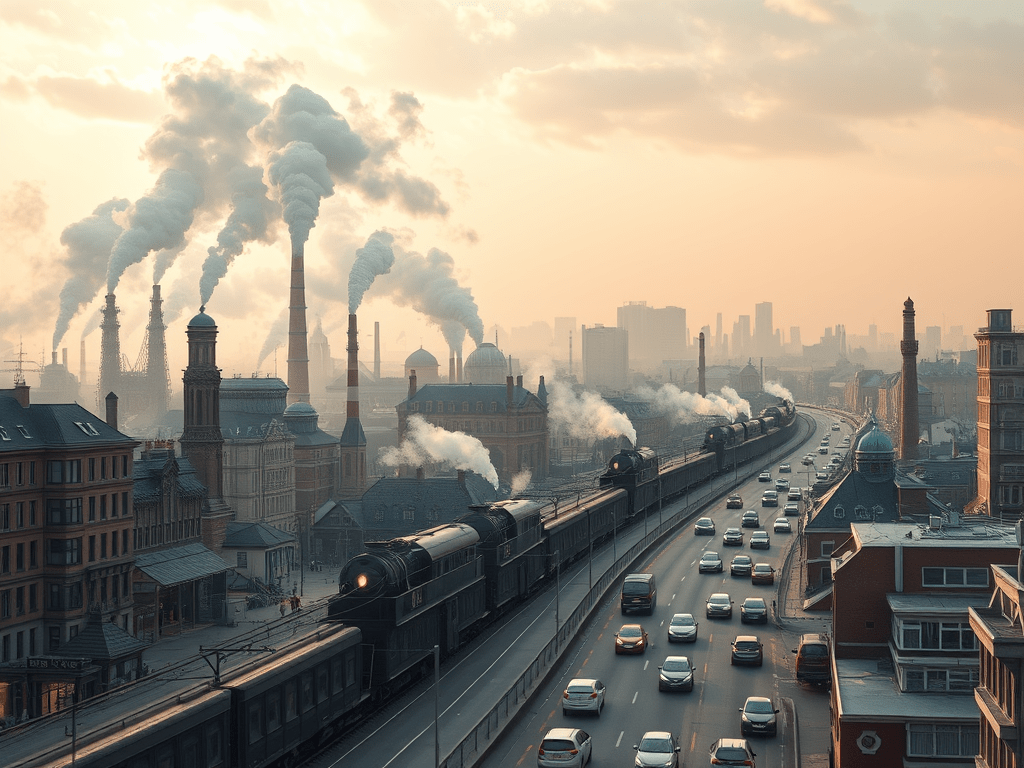
This analysis integrates the evolution of air quality in European urban centers from 1500 to 2020 considering:1) industrial and domestic emissions (combustion); 2) the means of transport (animals and mechanics); 3) sewage and sanitation systems.
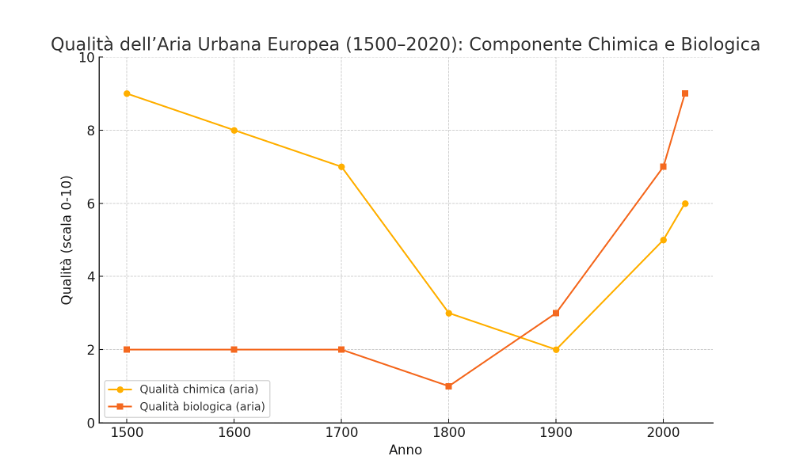
In the 1500-1700 centuries, emissions were dominated by domestic fumes (PM, CO) and the presence of animal waste and open-air sewage (ammonia, miasmas).
In the 1700s-1800s the Industrial Revolution brought the addition of SO2, heavy metals, while animal transport contributed dung and coarse dust. Sewage systems remained primary or absent.
In 1800-1900, with urban expansion, animal traffic, steam trains and the lack of sewage networks caused serious problems of miasmas and mixed air pollution (chemical-biological).
From 1900-1950 the decline of horsepower and the development of the car reduced faecal bioaerosols, but introduced CO, NOx and Pb (leaded gasoline).
From 1950 to 2020, modern sewer networks have almost eliminated the aerial biological component. Critical issues remain today on PM2.5, NO2 and tropospheric ozone.
Expanded bibliography consolidated in the table.
Historical Graph – Chemical and Biological Quality of Urban Air

Complete consolidated bibliography
| Author | Year | Title | Publisher/Institution |
| Onion | 1994 | Before the Industrial Revolution: European Society and Economy 1000–1700 | |
| Brimblecombe | 1987 | The Big Smoke: A History of Air Pollution in London since Medieval Times | Routledge |
| Mosley | 2001 | The Chimney of the World: A History of Smoke Pollution in Victorian and Edwardian Manchester | Routledge |
| Rosen | 1993 | A History of Public Health | |
| Chadwick | 1842 | Sanitary Report | |
| Halliday | 2001 | The Great Stink of London | |
| Tarr | 1996 | The Search for the Ultimate Sink | |
| Thorsheim | 2006 | Inventing Pollution: Coal, Smoke, and Culture in Britain since 1800 | Ohio University Press |
| WHO | 2021 | Global Air Quality Guidelines | WHO |
| EEA | 2022 | Air Quality in Europe — 2022 Report | EEA |
Sintesi Storica Integrata Evoluzione Integrata della Qualità dell’Aria nei Centri Urbani Europei (1500–2020)
Questa analisi integra l’evoluzione della qualità dell’aria nei centri urbani europei dal 1500 al 2020 considerando:
1) le emissioni industriali e domestiche (combustione);
2) i mezzi di trasporto (animali e meccanici);
3) i sistemi fognari e igienico-sanitari.
Nei secoli 1500-1700 le emissioni erano dominate da fumi domestici (PM, CO) e dalla presenza di rifiuti animali e liquami a cielo aperto (ammoniaca, miasmi).
Nel 1700-1800 la rivoluzione industriale portò l’aggiunta di SO2, metalli pesanti, mentre il trasporto animale contribuiva con sterco e polveri grossolane. I sistemi fognari restavano primari o assenti.
Nel 1800-1900, con l’espansione urbana, il traffico animale, i treni a vapore e la mancanza di reti fognarie causarono gravi problemi di miasmi e inquinamento atmosferico misto (chimico-biologico).
Dal 1900-1950 il declino dei cavalli e lo sviluppo dell’auto ridussero i bioaerosol fecali, ma introdussero CO, NOx e Pb (benzina al piombo).
Dal 1950 al 2020 le reti fognarie moderne hanno quasi eliminato la componente biologica aerea. Restano oggi criticità su PM2.5, NO2 e ozono troposferico.
Bibliografia ampliata consolidata in tabella.
Grafico Storico – Qualità Chimica e Biologica dell’Aria Urbana
Bibliografia Completa Consolidata
| Autore | Anno | Titolo | Editore/Ente |
| Cipolla | 1994 | Before the Industrial Revolution: European Society and Economy 1000–1700 | |
| Brimblecombe | 1987 | The Big Smoke: A History of Air Pollution in London since Medieval Times | Routledge |
| Mosley | 2001 | The Chimney of the World: A History of Smoke Pollution in Victorian and Edwardian Manchester | Routledge |
| Rosen | 1993 | A History of Public Health | |
| Chadwick | 1842 | Sanitary Report | |
| Halliday | 2001 | The Great Stink of London | |
| Tarr | 1996 | The Search for the Ultimate Sink | |
| Thorsheim | 2006 | Inventing Pollution: Coal, Smoke, and Culture in Britain since 1800 | Ohio University Press |
| WHO | 2021 | Global Air Quality Guidelines | WHO |
| EEA | 2022 | Air Quality in Europe — 2022 Report | EEA |
 A little science for everyone
Leave a comment