The continued growth of the world’s population and the consequent increase in water use inevitably leads to a decrease in water availability.
Water stress is the ratio between the water used and the available water.
When consumption approaches the quantity of available reserves, it is called scarcity.
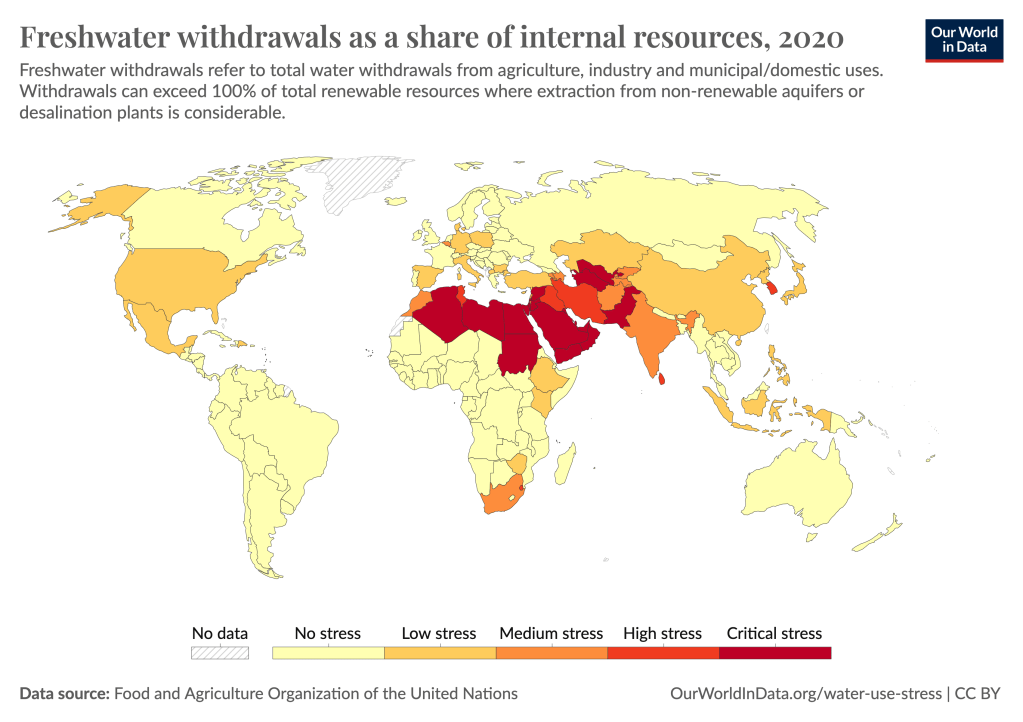
Several countries in the Middle East and North Africa have extremely high levels of water stress. Many have withdrawal rates well above 100 per cent, which means they are unsustainably extracting from existing aquifer sources or producing a large share of water from desalination.
Water stress in Northern Europe, Canada, much of Latin America, sub-Saharan Africa and Oceania is typically low or medium-low.
Use of water for the production of food products
Globally, 70% of freshwater withdrawals are used for agriculture. However, water requirements vary significantly depending on the type of food. The graphs show the global average withdrawals of fresh water in litre per kilogram of food product, per 1000 kilocalories and 100 grams of protein.
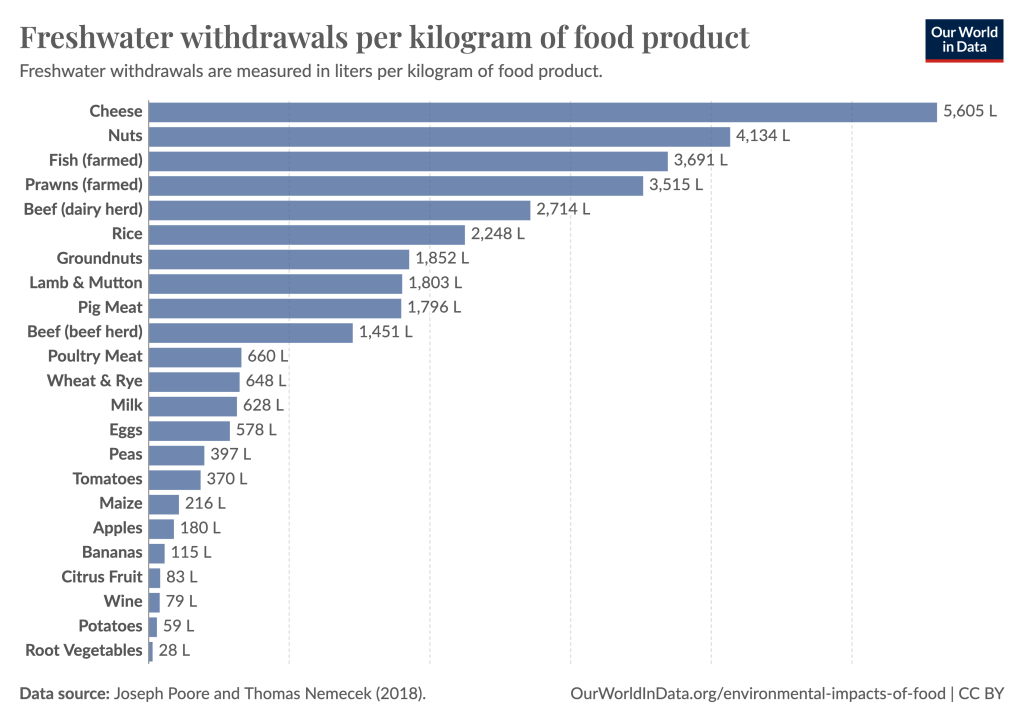

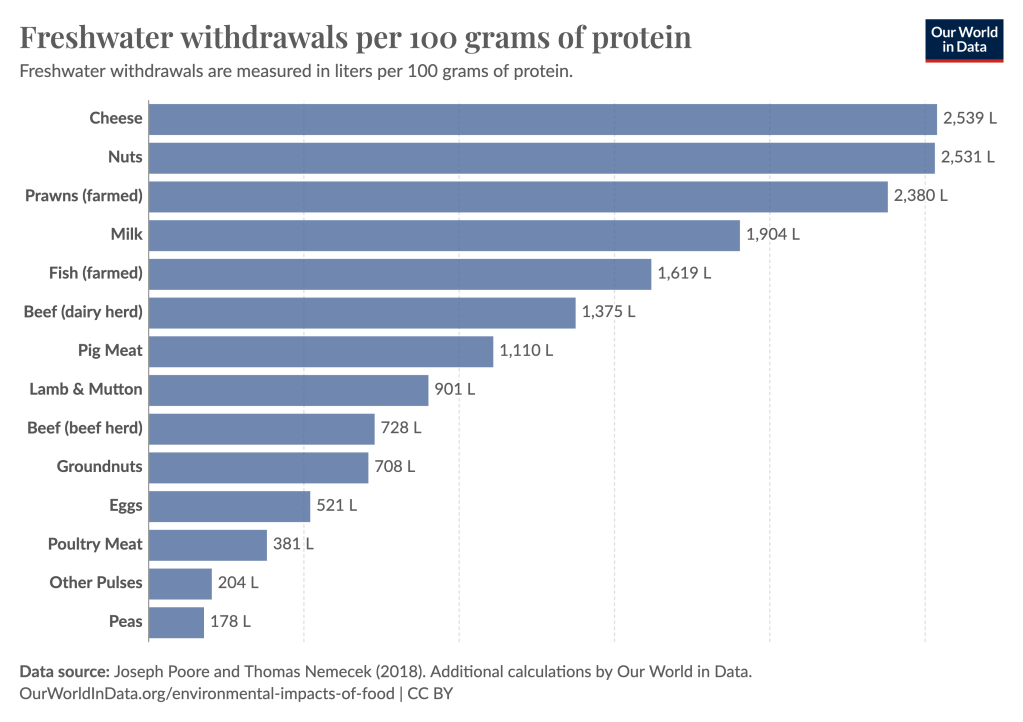
The foods that require the largest amounts of water for their production are milk, cheese, nuts, shrimp and farmed fish. In the background are meats (cattle, pigs and goats), followed by rice, chickens and eggs.
Water stress levels
Renewable inland freshwater resources refer to the amount of inland fresh water from the influx river basins and from the recharging underground aquifers. Data on renewable resources should be treated with caution. Unfortunately, the measure of water availability is collected discontinuously cannot be significant in many nations.
Water stress is defined, in its simplest terms, as that which occurs when the total withdrawal of fresh water constitutes a large proportion of the renewable freshwater resources available.
UN-Water defines the water stress categories based on this percentage (% of levies to renewable resources) as follows:
- <25% = from stress
- 25-50% = low stress
- 50-75% = average stress
- 75-100% = high stress
- >100% = critical stress
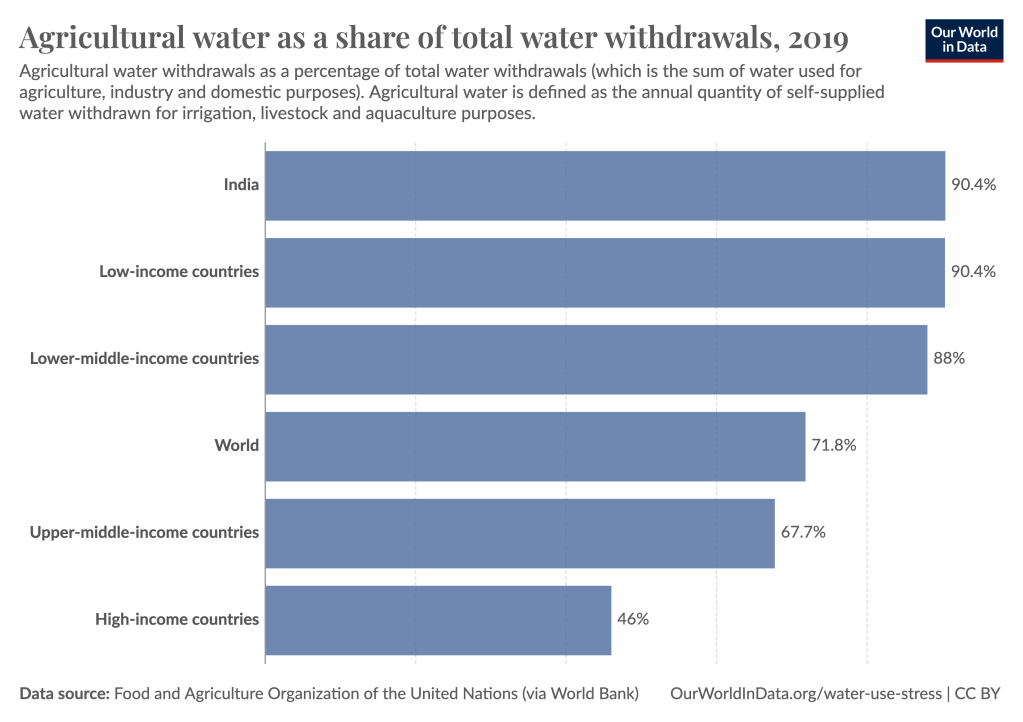
India and other low-to-middle-income countries have serious water supply problems while high-middle-income countries still have room to meet their needs and growth.
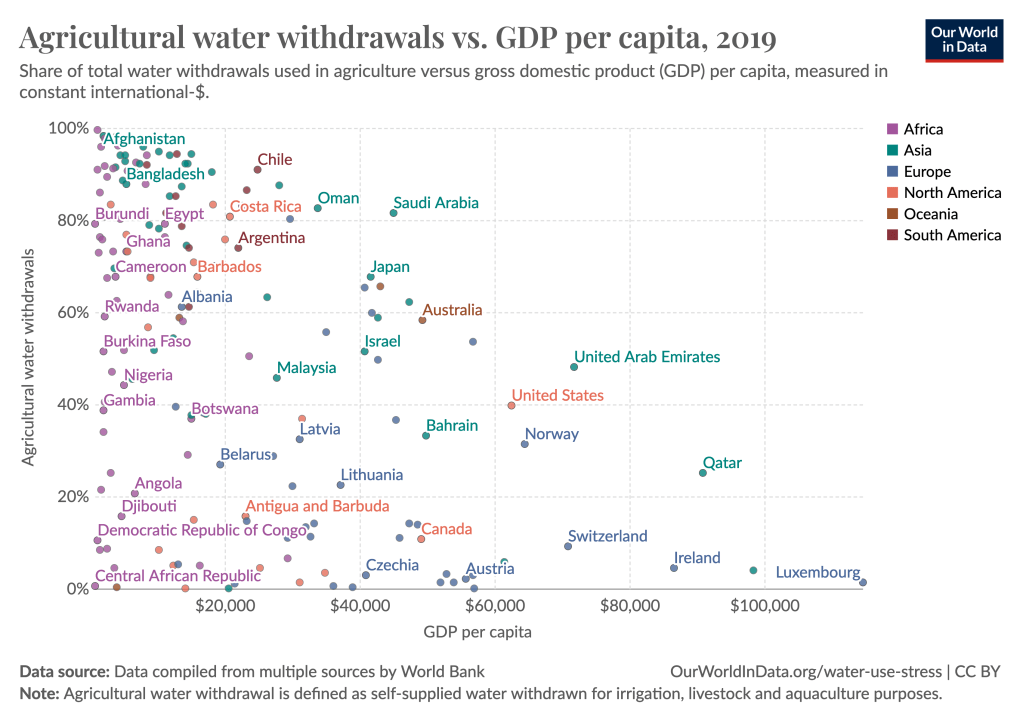
In general, countries with medium-high income and with high technical and technological development are able to better manage the water resource.
 A little science for everyone
Leave a comment