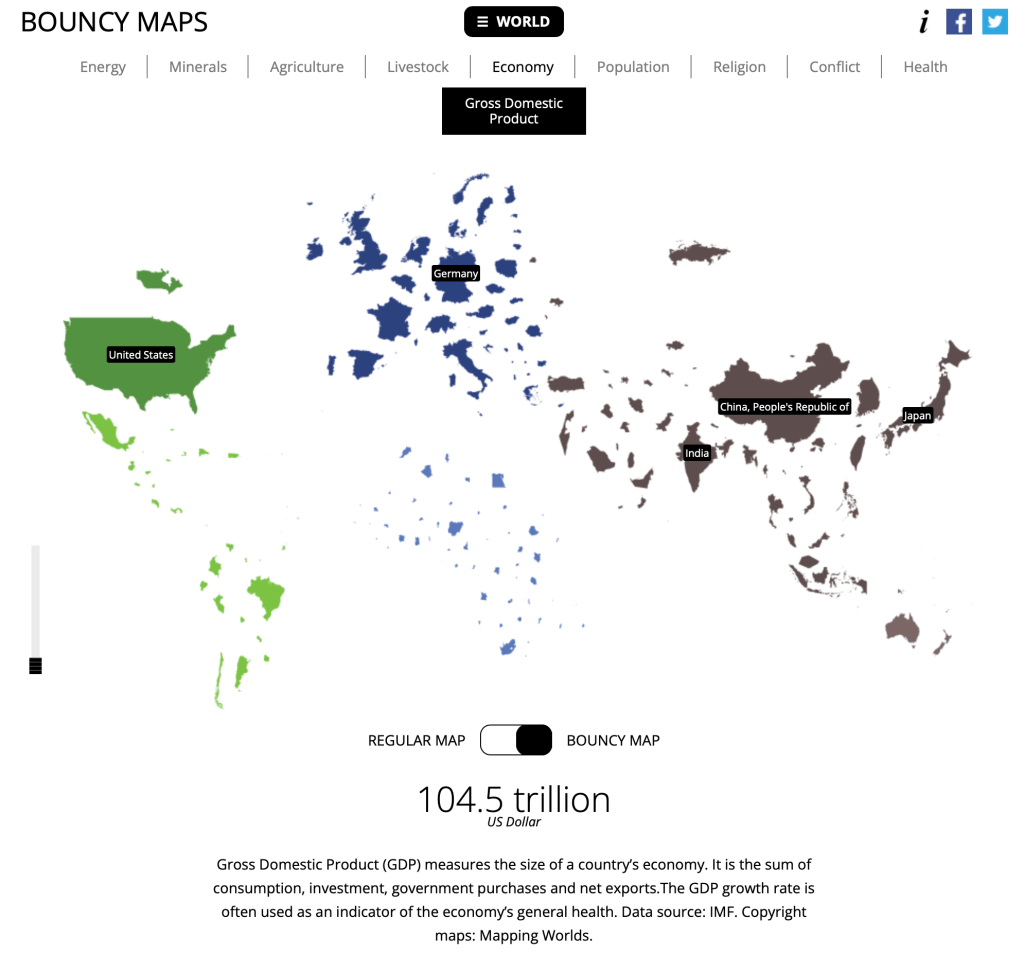
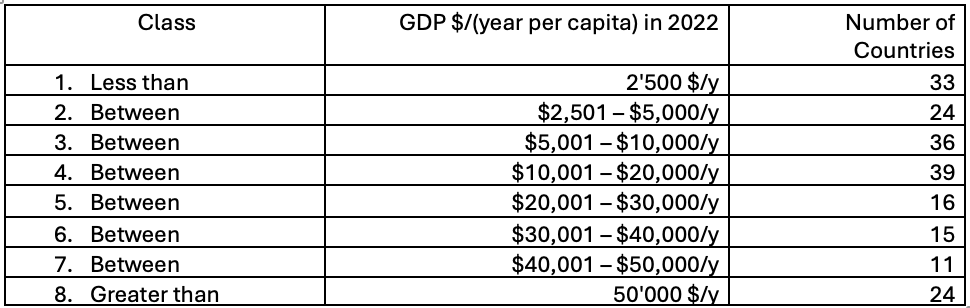
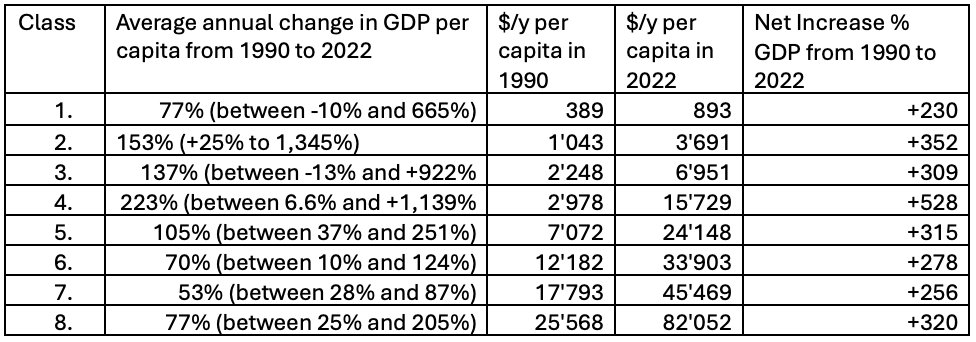
“Imagine a world with about 200 nations, each one unique. Each year, international organizations such as the World Bank collect and analyze data on these nations, helping to paint a picture of how things are changing over time. Recently, we looked at GDP (Gross Domestic Product) per capita data for 1990 and 2022, and divided them into eight categories. This allowed us to see how wealth moved between nations over the course of three decades. Surprisingly, in terms of the number of nations by income bracket, things have remained fairly stable. However, when you look at the data more closely, some significant changes emerge. The average annual growth in GDP per capita for each category showed an increase, as did the net increase in GDP from 1990 to 2022. But what is truly staggering is the huge wealth gap between the richest and poorest nations. This gap is reflected in key aspects of daily life such as access to water, energy, housing, food, education and healthcare. In wealthier nations, life can be expensive. Water, energy, housing, food, clothing, infrastructure, health and social services, and much more, all come at a price. At the same time, these nations face the challenge of growing public debts. On the other side of the coin, poorer nations have limited access to basic services, with a low life expectancy. The question we should all ask ourselves is: how long will it take to find a new balance among the nations of the world? This is a question that humanity has been asking since time immemorial, and the answer is not simple. But one thing is certain: we must continue to work together to promote equity and reduce global disparities.”
 A little science for everyone
Leave a comment